Category: Uncategorized

  • A Vietnamese landscape with a European feeling

    A Vietnamese landscape with a European feeling

    Behind the pine-covered hills and terracotta roofs of Thanh Xuan Valley lies a longer story of damaged land, tree planting, and patient renewal.

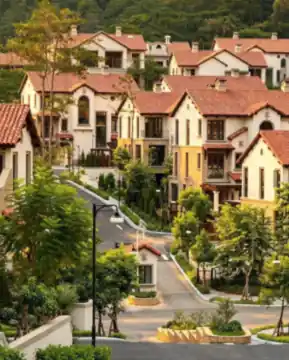
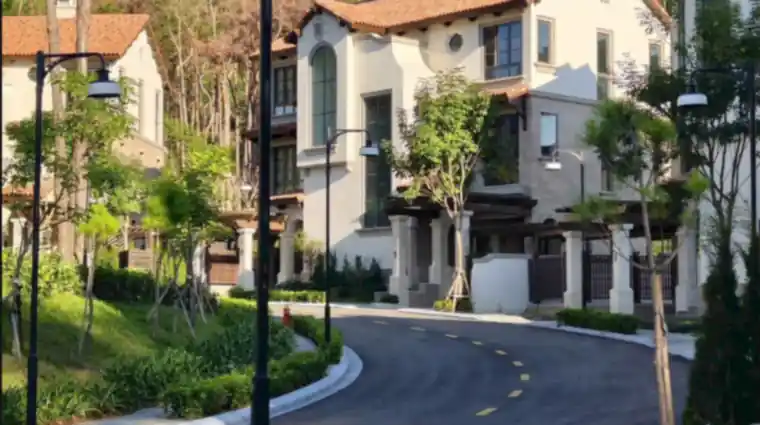
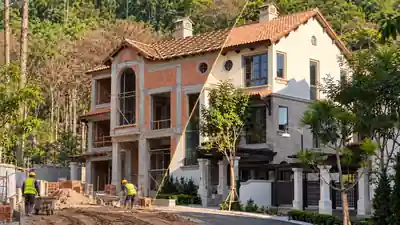
    There is something unexpectedly European about parts of Thanh Xuan Valley. Pale façades, warm terracotta roofs, shaded arches, and pine-wooded slopes can bring an Italian hillside village to mind. Yet beneath that impression is a distinctly Vietnamese landscape, shaped by difficult conditions and generations of people working to improve them.

    One account of the region’s transformation traces its beginnings to forest clearance during the French colonial period. Many say that the removal of valuable timber weakened the landscape’s ability to retain soil and water, setting in motion a cycle of erosion, declining fertility, and ecological deterioration. It is said that the profits of the hardwood timbers went to the French and the local communities did not benefit much. It offers a possible explanation for how formerly wooded hills became impoverished land. However, further archival and ecological research is needed to establish the extent of colonial logging around Đại Lải and its contribution to the destructive changes.

    What is documented is the difficult condition of the wider Đại Lải landscape. Vĩnh Phúc Museum describes the basin before the reservoir as a barren valley bordered by bare hills. In the rainy season, water rushed down the streams and drained quickly, carrying fertile sediment away. Fields suffered erosion, and the land became increasingly impoverished. For local communities, these were conditions that affected the ground on which their livelihoods depended. [1]

    The response involved both water and trees.

    Construction of Đại Lải reservoir began in October 1959 and was completed in July 1963. Youth volunteers contributed years of demanding work to a project intended to improve agricultural water supply and address drought and flooding. The lake that now helps give the area its beauty began as a practical investment in the lives of the people living around it. [2]

    At the same time, President Hồ Chí Minh was encouraging a wider transformation of the countryside. On 28 November 1959, he published his appeal for Tết trồng cây, connecting tree planting with lasting improvements to the country and people’s lives. That initiative gave national expression to the idea that a greener landscape could be created through sustained, collective effort. [3]

    The greening of Đại Lải can be understood within this wider national movement. A specific instruction from Hồ Chí Minh to reforest the land now occupied by Thanh Xuan Valley is rumoured but has not yet been established. His documented role is in instigating the national tree-planting initiative.

    Forestry research and practical learning subsequently became part of the local story. A university account traces the Northeast Forest Science Centre’s beginnings to 1976 and describes its work in research, technology transfer, training, and student field practice. The surrounding landscape became a place where people studied how trees could grow and thrive, as well as a place where they planted them. [4]

    The trees themselves add an unexpected international connection.

    Although the scenery may suggest Europe, forestry research at Đại Lải documents Caribbean pine, a species originating in Central America and the Caribbean. Experimental planting of this pine in Vietnam began in Lâm Đồng in 1963 and later extended to other locations, including Đại Lải. Researchers recorded its adaptability and growth across a range of planting conditions. Regional forestry records also describe several Asian pine species. [5]

    The European feeling, therefore, comes from the combination of pine-wooded hills and European-inspired architecture. The development’s architectural ambitions also have a longer history. In 2005, Vietnam Investment Review identified Đoàn Thị Xuân Thanh as director of Thanh Xuan Joint Stock Company and reported her ambition to create a development that respected the natural ecological environment. The plans discussed protecting the existing landscape and exploring traditional local building materials. Working sensitively with the setting was already part of the project’s stated vision. [6]

    The current developer describes further planting and care over two decades, with BIM Land continuing the earlier vision in 2020. Its published account compares satellite images from 2002 and 2022 and describes planning intended to retain mature trees and follow the hillsides. These statements explain the developer’s approach. [7]

    Today, the Mediterranean character is explicit in the design of Valley Town. Terracotta roofs, arches, shaded outdoor spaces, and landscaped streets draw on a range of international references, including Lake Como in Italy. Together with the wooded slopes, they create the atmosphere that makes the European comparison so inviting. [8]

    For people considering a home here, the landscape’s history adds another dimension to the view. Mature trees represent years of growth and care. The nearby reservoir carries the labour of an earlier generation. New buildings become another chapter in a place that has already undergone considerable change.

    An Italian hillside may be the first impression. The deeper story is Vietnamese: the effort to improve difficult land, the patience to plant for the future, and the responsibility to care for the landscape that future generations will inherit.


    Sources and further reading

    1. Vĩnh Phúc Museum — Danh thắng Đại Lải. Documents the barren landscape, runoff, erosion, and reasons for building the reservoir. It does not establish colonial logging as their cause.
    2. Vietnam Association of Former Youth Volunteers — Đại Lải reservoir history. Construction dates, agricultural purpose, and the contribution of youth volunteers.
    3. Hồ Chí Minh Museum — chronology for 28 November 1959. Records Hồ Chí Minh’s appeal for Tết trồng cây.
    4. Bắc Giang Agriculture and Forestry University — Northeast Forest Science Centre. Institutional history and research and educational functions.
    5. Vietnamese Academy of Forest Sciences — Caribbean pine at Đại Lải. Species origins and planting history. See also regional planting history in a Vietnam National University of Forestry thesis.
    6. Vietnam Investment Review — 15 August 2005. Early development plans, Đoàn Thị Xuân Thanh’s role as director, and the stated environmental vision.
    7. Thanh Xuan Valley — development history. The developer’s account of planting, landscape planning, and continuity.
    8. Thanh Xuan Valley — Valley Town. Mediterranean architecture and named design references.
  • Before beauty comes structure: 5 things I look at on a building site

    Before beauty comes structure: 5 things I look at on a building site

    Illustration: left half a villa under construction, right half finished

    BEFORE BEAUTY COMES STRUCTURE

    What buyers do not see when they visit the show home

    Huỳnh Ngọc Property · Notes from the building site · Illustration

    A show home is made to look beautiful. A building site has no reason to wear make-up. So, when I am allowed, I put on a hard hat and go and look at what the show home hides. These are the five things I watch.

    1. Progress against the promise

    Compare what you see with the schedule in the contract or the official announcements. Which parts are behind, and why?

    2. Concrete surfaces and joints

    Honeycombed surfaces, cracks or exposed reinforcement are things to ask the supervising engineer to explain. I am not an engineer; I ask the questions and note the answers.

    3. Where the water goes when it rains

    Walk the site after rain: where does water stand, how do the drains work, how is waterproofing done?

    4. Trees kept or newly planted

    Trees kept from the start and newly planted trees need very different amounts of time to give shade.

    5. A tidy site or a messy one

    How a building site is organised often says a lot about how the project will be managed later.

    Next time I will share notes from a specific building site, when the developer allows it. Which site would you like me to visit?

    Illustration, not a photograph of a specific project. Draft, being refined.

  • Ring Road 4 – Capital Region: read the timeline before the price list

    Ring Road 4 – Capital Region: read the timeline before the price list

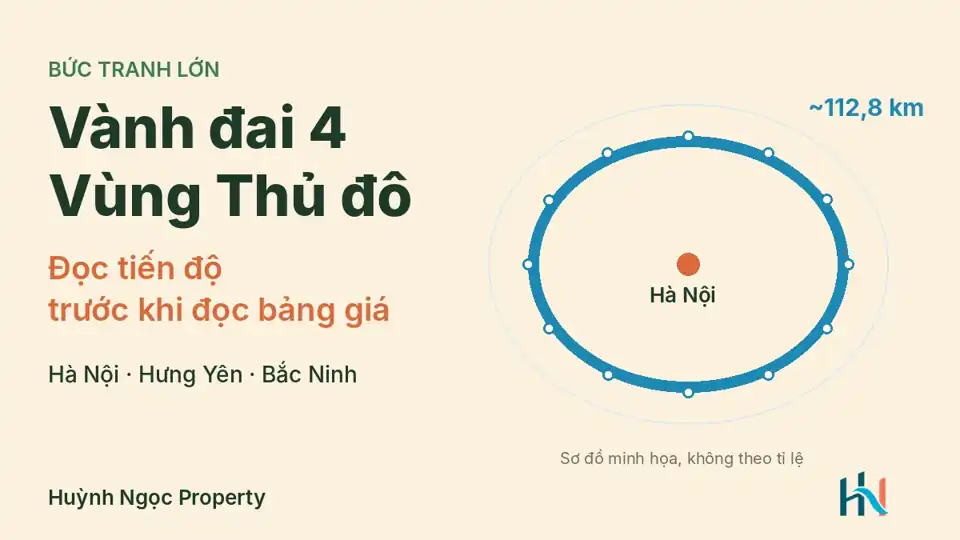
    When a project is presented as “near a major road that is almost finished”, I always ask: finished according to which plan, and how often has that plan changed? Ring Road 4 – Capital Region (Vành đai 4 – Vùng Thủ đô) is a good example to practise this question on.

    What has been announced

    • About 112.8 km long, through Hà Nội, Hưng Yên and Bắc Ninh; it starts at the Nội Bài – Lào Cai expressway (Sóc Sơn) and ends at the Nội Bài – Hạ Long expressway (Quế Võ, Bắc Ninh) (Báo Đấu thầu, September 2022).
    • Total investment of more than VND 85,000 billion (VNA, republished by Saigon Times, March 2023).
    • Hanoi’s 2022 plan: start in June 2023, substantially complete in 2026, in use in 2027.
    • In early 2026 the press reported that almost all land had been handed over and that the road was expected to be substantially built in 2026 (Báo Văn Hóa, February 2026).

    What is rarely mentioned

    In 2023 this same project was reported to be at risk of delay: land clearance in Hưng Yên and Bắc Ninh was slow and compensation costs exceeded the approved amounts (VNA, March 2023). Progress was later accelerated. The lesson is not that “the project will be late”, but that plans can change, and the value of a property should not rest entirely on one date.

    From the big picture to your home

    Before looking at the price list, I suggest you ask:

    • Where is the nearest interchange to the project, and what stage is that section at?
    • Where does the progress information you heard come from, and what is its date?
    • If the road opens a year or two later, does your plan still make sense?

    I do not answer these questions for you. But I can look for the sources and compare them with you.

    Sources

    This article shares information and perspectives, not investment advice. Please do your own research and consult a professional before deciding. Draft, being refined; information may have changed since the date of each source.

  • A buyer’s story: three townhouses, or one apartment with an operator?

    A buyer’s story: three townhouses, or one apartment with an operator?

    Composite character: names and details have been changed; this is not a specific client.

    Mr M., 52, owns a manufacturing business. He has three townhouses that he rents out. The income is steady, but he is tired: repairs, finding tenants, handling contracts. One afternoon he asked me: “Is there a way to keep my assets with less worry?”

    What we compared

    • Control: with the townhouses he decides everything himself. With an apartment that has an operator, much is done for him, but to common standards.
    • Running costs: according to Savills, management fees for branded residences can be 4–5 times the VND 20,000–40,000 per m² usual in premium projects (Tạp chí Kinh tế – Tài chính, April 2026).
    • Time and effort: this is what Mr M. wanted to reduce most, and it is also the hardest to put a price on.
    • Liquidity when selling: a question to ask for each project and each moment; there is no general answer.

    Mr M. did not decide on the spot. He took the comparison to his accountant and his lawyer, and then chose for himself. I think that is the right way.

    And you?

    If you were in Mr M.’s position, what would you ask first?

    This article shares information and perspectives, not investment advice. Please do your own research and consult a professional before deciding. Draft, being refined.

  • Branded residences: worth it, or just a brand? Two opinions

    Branded residences: worth it, or just a brand? Two opinions

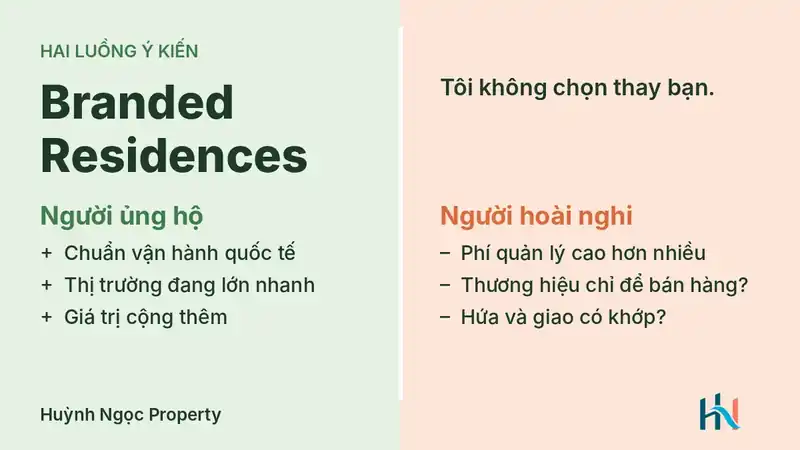
    Branded residences – homes carrying the name of a hotel or international lifestyle brand – are much talked about. I work with these homes every day, which is exactly why I want you to hear both sides.

    What supporters say

    • Vietnam is one of the world’s top four branded residence markets, with more than 50 projects and 34 brands (Savills, December 2025).
    • One analysis says branded projects can add about 10–30% in value over comparable homes, depending on location, scale, brand and execution (Tạp chí Kinh tế – Tài chính, April 2026).
    • International operators bring service standards that have been tested in many places.

    What sceptics say

    • Management fees can be 4–5 times what is usual in premium projects (Savills, via Tạp chí Kinh tế – Tài chính, April 2026).
    • The biggest risk, according to a Savills expert: the brand is used only as a sales tool rather than a real commitment to value.
    • Gaps between what is promised at sale and what is delivered, especially with less experienced developers.

    I will not choose for you

    Here are three questions to ask anyone who is selling to you, including me:

    • How long is the contract with the operator, and what happens when it ends?
    • What will the management fee be, and what does it include?
    • How involved is the brand: does it only lend its name, or does it run the operation itself?

    Sources

    This article shares information and perspectives, not investment advice. I sell this type of property, which is why I do not decide for my clients. Draft, being refined.

  • Since 1 July 2025, Vĩnh Phúc is part of Phú Thọ province: what should property buyers ask?

    Since 1 July 2025, Vĩnh Phúc is part of Phú Thọ province: what should property buyers ask?

    On 12 June 2025 the National Assembly adopted Resolution No. 202/2025/QH15 on the reorganisation of provincial-level administrative units. Under it, the whole of Vĩnh Phúc, Hòa Bình and Phú Thọ provinces were combined into a new province named Phú Thọ. The new provincial governments started work on 1 July 2025.

    For buyers this touches familiar projects: several resort areas that used to be in Vĩnh Phúc or Hòa Bình, such as Thanh Xuan Valley, are now in the new Phú Thọ province.

    What changes, and what does not?

    The land has not moved and the landscape has not changed. What changes is the administrative name, the authority that receives your papers and, over time, the planning of a larger province. I do not draw legal conclusions in this article; I suggest you ask the right people.

    Three questions worth asking

    • Ask the developer: do my contract and papers show the old or the new address, and does anything need updating?
    • Ask a lawyer or the land registration office: which Phú Thọ authority now handles transfers and certificates?
    • Ask yourself: the new province’s planning will be completed over time; where will I follow the official information?

    Source

    This article shares information; it is not legal or investment advice. Draft, being refined.